
Affiliate disclosure: As an Amazon Associate, Rum and Ringtails earns from qualifying purchases. Links to Amazon below are specific products we picked by hand; if you buy through them we may earn a small commission at no extra cost to you. We don’t take money to recommend anything.
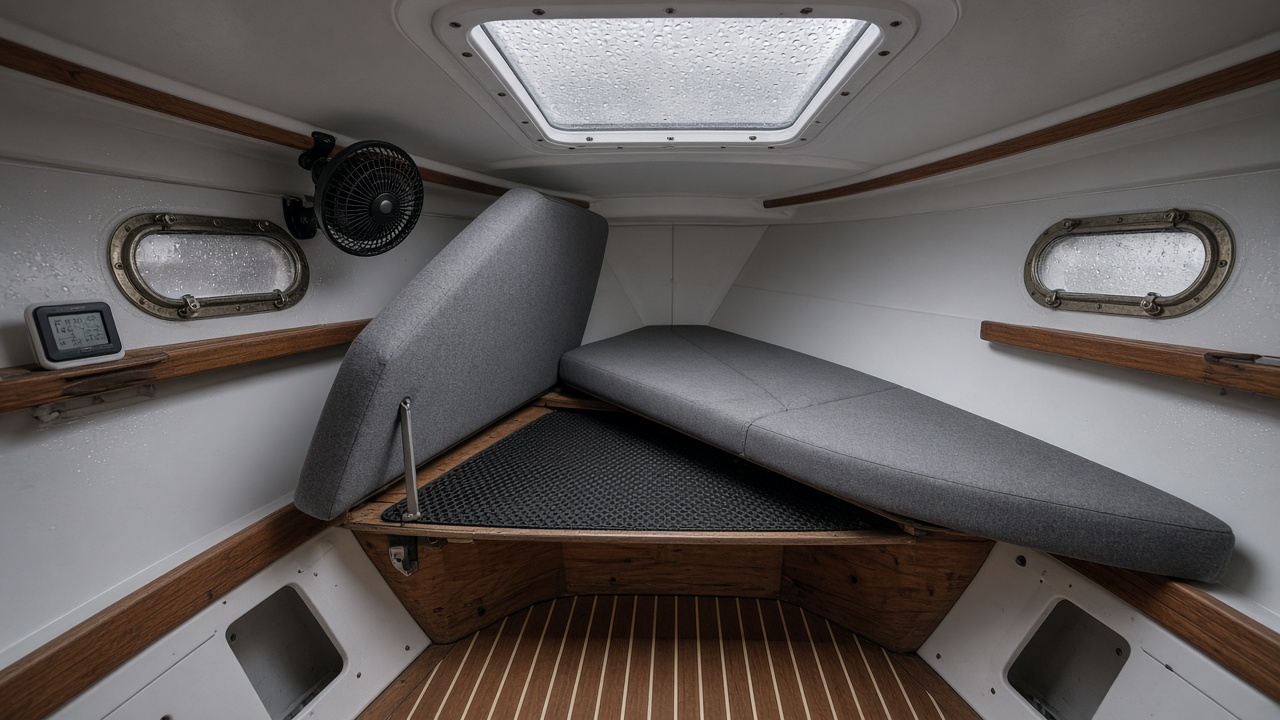
If you want to know how to stop condensation on a boat, ask anyone who has woken up to a drip on the forehead from the hatch above the V-berth. We have. The raccoon blamed the possum, the possum played dead, and the real culprit was the two of us breathing all night in a small fiberglass box sitting on cold water. Condensation is one of the biggest comfort problems for liveaboards outside the tropics, and left alone it turns into mildew in the lockers, black spots on the headliner and a mattress that smells like a bilge.
The good news: you don’t need to rebuild the boat. You need to understand why boats sweat, then work through a short list of fixes in the right order. This is that list, from a crew that lives aboard full time.
Why boats sweat: the simple science
Warm air holds more water vapour than cold air. When warm, damp cabin air touches a surface colder than its dew point, the vapour turns back into liquid on that surface. On a boat, the cold surfaces are everywhere: acrylic hatches, aluminium-framed portlights, uninsulated hull sides below the waterline, metal through-bolts and the plywood under your mattress, which sits right against a hull that is chilled by the sea.
Meanwhile the crew keeps adding moisture. People breathe and sweat it out all night. Cooking, especially boiling pasta or running a kettle, pumps steam into the saloon. A propane stove adds water vapour as it burns, and wet foul weather gear hung below does the rest. Small volume plus lots of moisture plus cold walls equals rain on the inside.
So every fix below does one of three jobs: get the moisture out, warm up the cold surfaces, or keep air moving so damp pockets can’t form. The best results come from doing all three.
How to stop condensation on a boat: start with ventilation
Ventilation is free or cheap, and it works on every boat. The goal is cross-flow, with fresh air coming in at one end and damp air leaving at the other, even when it’s cold enough that you’d rather seal yourself in.
- Crack a hatch, even in winter. A forward hatch open a finger’s width with a dodger or hatch cover keeping rain out does more than you’d think. Pair it with an open companionway washboard gap aft for real airflow.
- Use your dorade vents. If you have dorade boxes, keep them open and clear. They exist precisely to move air while keeping water out.
- Add a solar vent. A solar-powered deck vent runs a small exhaust fan all day without touching your batteries, which is handy when the boat is left closed up.
- Run a low-draw fan. A Caframo Sirocco II 12V fan pointed at the worst corner keeps air from going stagnant. We covered low-draw fans and the solar to run them in staying cool and powered at anchor, and the same fans earn their keep in winter.

Vent the galley at the source
Most of the moisture in a liveaboard boat comes from the galley. Cook with the lid on, use a pressure cooker for long boils (it vents far less steam than an open pot), and open the hatch nearest the stove while you cook. Our liveaboard galley gear list has the pressure cooker and nesting pots we use for exactly this reason.
Insulate the cold surfaces
Ventilation moves damp air out. Insulation stops it condensing in the first place by keeping surfaces above the dew point.
Hatches and portlights
Acrylic hatches are the worst offenders because they’re thin and face the cold sky. Fit fitted hatch covers on the outside (measure your hatch first, these come in Lewmar sizes), and on the inside a simple layer of clear bubble wrap or a fitted fabric cover over the lens makes a noticeable difference overnight. Wipe the frames in the morning with a microfibre cloth, or use a Kärcher WV 1 Plus window vac to pull the water off hatches and portlights in seconds instead of smearing it into the headliner.


Hull sides and lockers
For the hull itself, the material matters. Practical Sailor’s testing found that only closed-cell foam that is tightly bonded to the surface works, because any air gap behind loose insulation becomes its own condensation trap (read their liveaboard insulation findings). An XCEL self-adhesive closed-cell marine foam roll inside hanging lockers and behind cushions on the hull side stops clothes and cushions from getting damp where they touch the cold skin.

Dry the air: dehumidifiers, heat and moisture traps
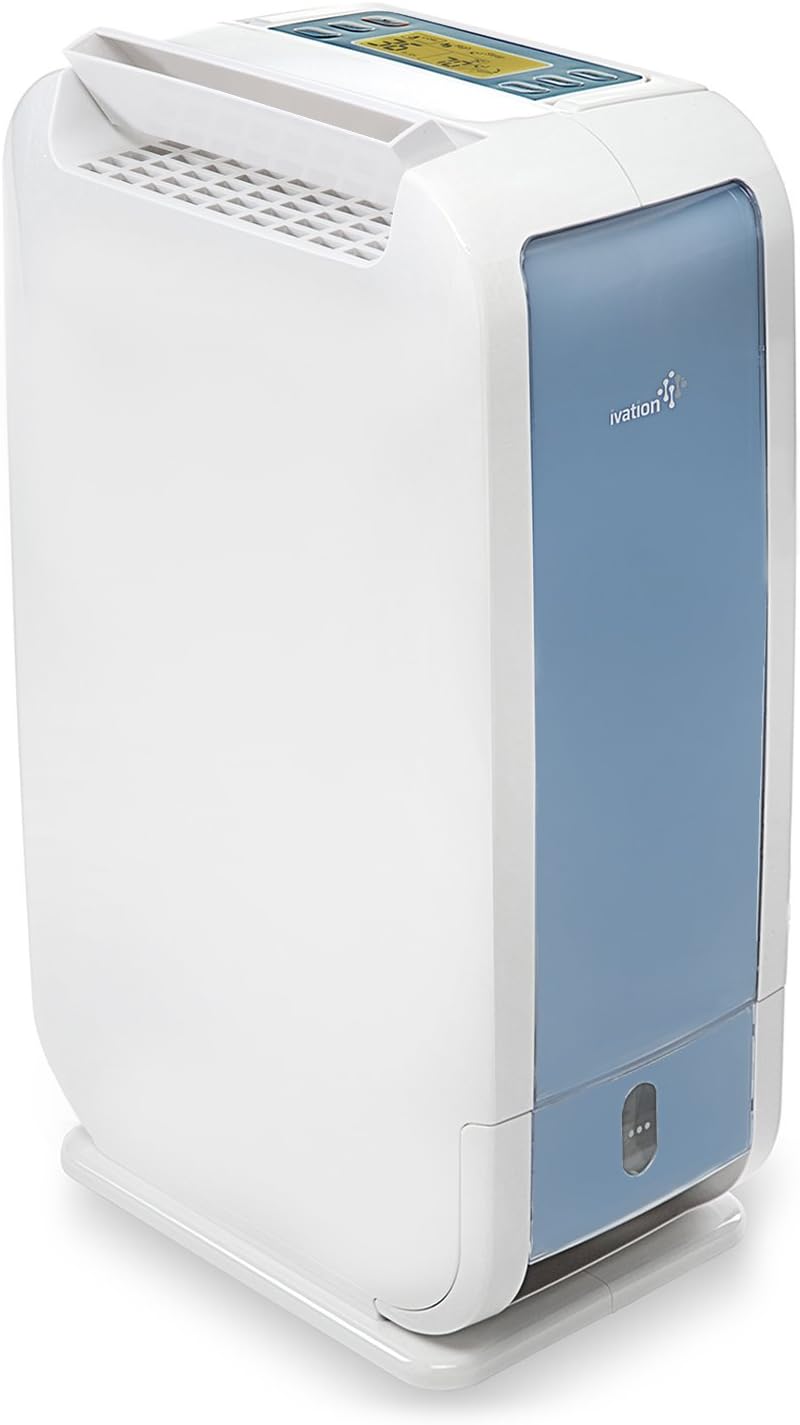
When you’re plugged in at a marina, a dehumidifier is the single most effective tool against boat condensation. A compact desiccant unit like the Ivation 13-pint desiccant dehumidifier keeps working in cool temperatures where some compressor units struggle, and its continuous drain hose can run into a sink so you aren’t emptying a tank every morning.
Heat helps too, but pick the right kind. A vented diesel or forced-air heater draws combustion air from outside and exhausts it outside, so it dries the boat as it warms it. Unvented propane or kerosene heaters do the opposite: burning the fuel releases water vapour (and carbon monoxide) straight into the cabin. If you burn anything aboard, fit a marine-rated CO alarm such as the MTI Safe-T-Alert 12V marine CO alarm, which wires into the boat’s DC system so it never sits there with a dead battery.

Away from shore power, passive moisture traps are your friend. A few DampRid hanging moisture absorbers in the hanging locker, the head and under the forepeak won’t dry a whole boat, but they keep the dead-air corners from going green. For small lockers we like the Eva-Dry E-500 renewable dehumidifier: silica gel in a little box that needs no power aboard, and you dry it out by plugging it in next time you’re on shore power.


Measure it, don’t guess it
A cheap Govee H5075 Bluetooth hygrometer tells you whether what you’re doing is working. The US EPA recommends keeping indoor humidity below 60 percent, ideally between 30 and 50 percent, to keep mold from growing (EPA brief guide to mold and moisture). On a boat in a damp climate that can be hard to hit, but watching the number tells you which fixes actually move it. The Govee logs to your phone, so you can see what the cabin did overnight.

Stop condensation under the mattress
The berth is where condensation does the most damage, because a warm body sits on a cushion that sits on a cold plywood base, which sits against the hull. Moisture driven down by body heat hits that cold base and stays there, out of sight, until you lift the cushion and find mildew.
- Put a breathable underlay under it. An Aire-Flow mesh mattress underlay (the same idea as the Hypervent mesh many cruisers swear by) lifts the cushion off the base so air can circulate underneath. It’s the fix almost every long-term liveaboard ends up using.
- Encase the mattress. A six-sided waterproof mattress encasement stops body moisture from soaking into the foam in the first place.
- Lift the cushions. Prop the berth cushions up on their edges for a few hours on dry days. It costs nothing and catches problems early.
- Leave a gap at the hull side. Cushions pressed hard against the hull sweat on the back. Even a small gap lets air in.

Clean mildew early (and stop it coming back)
If you already have mildew spots, clean them while they’re small. A dedicated marine mildew stain remover or a mild vinegar solution on hard surfaces does the job, and the EPA advises fixing the moisture source as well, because cleaning alone won’t stop mold from returning. Dry everything thoroughly afterwards, then put the fixes above in place.
We log every cleaning, hatch reseal and dehumidifier filter change in our Boat Maintenance Tracker, a printable download that makes it easy to spot which corner of the boat keeps coming back damp. If you’re just moving aboard, our liveaboard essentials checklist lists the dehumidifier, fans and moisture traps alongside the rest of your first-year kit.
Our condensation routine aboard
Here’s what the Bin Bandits actually do through a damp winter:
- Forward hatch cracked under a cover, companionway gap aft, every night.
- Lids on pots, hatch open over the stove while cooking.
- Wet gear hung in the cockpit or under the dodger, never in the saloon.
- Dehumidifier running whenever we’re on shore power, draining into the galley sink.
- Mesh underlay and a waterproof encasement on the V-berth, cushions lifted once a week.
- Hatches and portlights wiped every morning, before the drips hit the headliner.
None of it is glamorous. All of it is cheaper than replacing a mildewed mattress. And if you need a shirt for the person who checks the bilge every morning, the Chief Bilge Inspector shirt was drawn for exactly that crew member. The rest of the crew lives in our Bin Bandits collection.
Something for the long, damp nights
Winter at the dock means more evenings below. Our coloring books are made for exactly that: Things That Float, Find the Sneaky Crab and Harbor Hygge, the coziest of the three. Prefer printables? The digital downloads include the Liveaboard Checklist Bundle and the maintenance tracker, ready to print the minute you buy them.
FAQ: boat condensation
What causes condensation on a boat?
Warm, moist cabin air touching surfaces colder than its dew point, such as hatches, portlights and hull sides. Breathing, cooking, wet gear and unvented heaters add the moisture, and the cold water around the hull keeps those surfaces chilly.
What is the fastest way to stop condensation on a boat?
Increase ventilation and reduce moisture at the source. Crack a hatch, open the vents, keep pot lids on and run a dehumidifier when you have shore power. Insulating hatches and the berth base gives the biggest long-term improvement.
How do I stop condensation under my boat mattress?
Use a breathable mesh underlay so air circulates under the cushion, add a waterproof mattress encasement, leave a small gap between the cushion and the hull, and lift the cushions regularly to air them.
Does a dehumidifier work on a boat?
Yes, especially when the boat is closed up at a marina. Desiccant models keep working in cooler temperatures, and a drain hose into a sink means you don’t have to empty it constantly. You need shore power or a large battery bank to run one.
Is a propane heater bad for condensation?
Unvented propane or kerosene heaters release water vapour and carbon monoxide into the cabin, which makes condensation worse and is a safety risk. A vented diesel or forced-air heater is the better choice aboard, with a CO alarm fitted either way.
Leave a Reply