
Affiliate disclosure: As an Amazon Associate, Rum and Ringtails earns from qualifying purchases. Links to Amazon below are specific products we picked by hand; if you buy through them we may earn a small commission at no extra cost to you. We don’t take money to recommend anything.
Boat provisioning is where liveaboard dreams meet locker reality. You can plan a month of meals on paper, then watch half of it go soft, damp or mystery-flavored after two weeks of humidity and heel. Captain Ringtail wants everything labeled and stacked. First Mate would rather raid the galley at midnight and invent dinner from whatever is left. Both approaches work better with a pantry system that survives salt air, limited fridge space and the fact that the nearest grocery run might be a dinghy ride away.
This is how we provision for life aboard: what we buy, how we store it, and the gear that keeps dry goods dry and produce edible. Pair it with our liveaboard galley gear list and boat storage ideas if you are still sorting lockers.
Start with a provisioning map, not a shopping cart
Before you fill the cart, decide where each category lives on the boat:
- Daily pantry: flour, rice, pasta, coffee, oil, the cans you reach for every week. These stay in the galley, in clear containers you can grab underway.
- Bulk stores: big bags of rice, beans, sugar and flour. These go low and central in food-grade buckets or sealed bins, not stacked in the bow.
- Produce zone: fruit and veg need air and light, not a dark dank locker. Hammocks and open baskets beat sealed plastic for bananas and potatoes.
- Water and liquids: jerry cans and water jugs live where weight helps the boat (low, center) and where you can fill them without dragging them through the cabin.
Write it down. A simple list per locker beats digging for tomato paste while the pasta water boils dry. If you are still sorting what deserves a locker at all, our liveaboard first-year essentials checklist and the printable Liveaboard Checklist Bundle help you decide before you overbuy.
Airtight dry goods beat bags every time
Paper bags of flour and rice absorb humidity, tear in lockers and invite bugs. Once something comes aboard, it leaves the store packaging and goes into a sealed container.
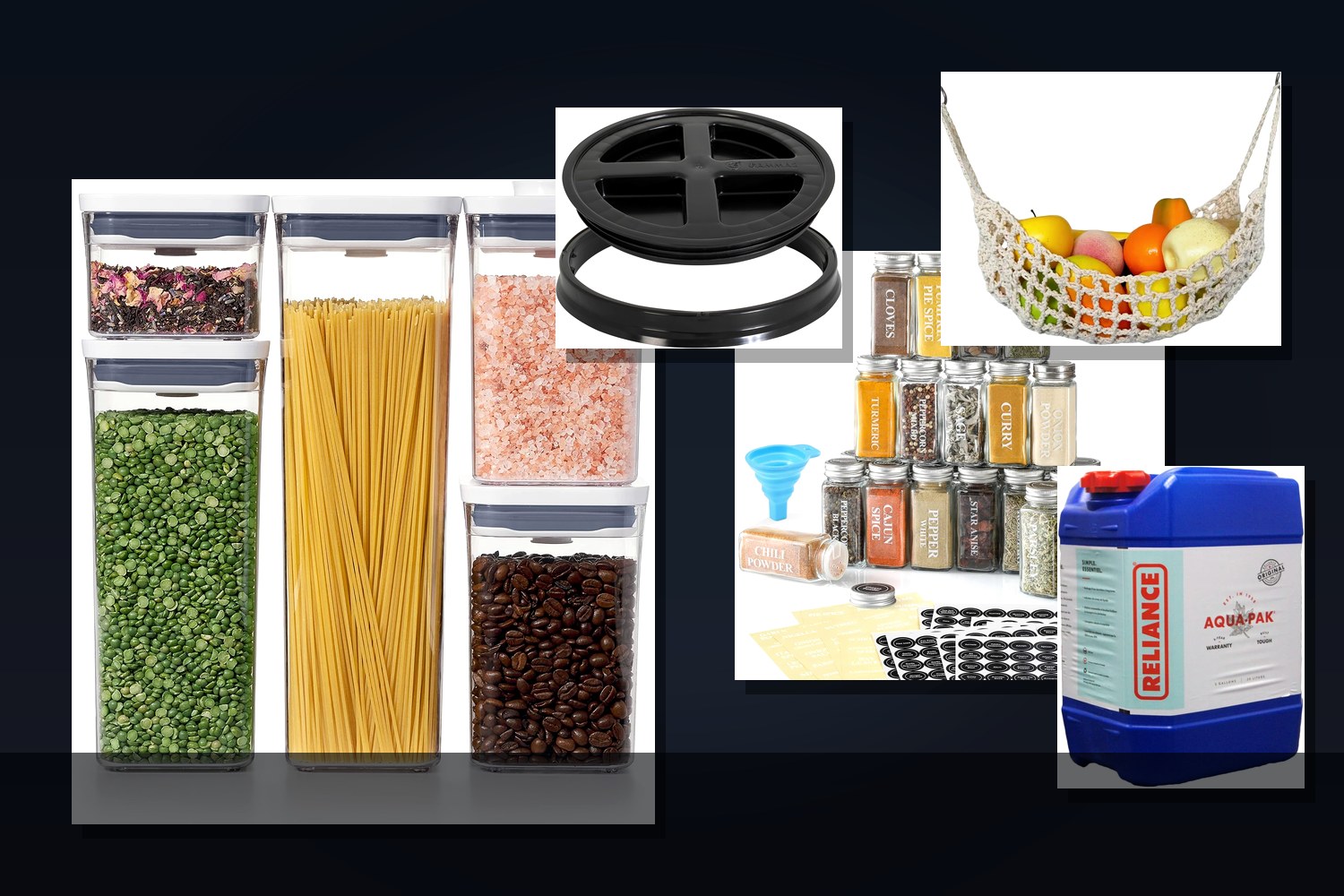
We use stackable airtight POP pantry containers for the daily staples that live in the galley. Clear sides mean you see when the rice is low before you are mid-passage. Push-button lids seal well enough for boat motion, and the stackable shape wastes less locker volume than round canisters.

Measure your locker openings first. A tall square container that does not fit through the hatch is just expensive clutter.
Bulk provisions: food-grade buckets with screw lids
For 25 lb bags of rice, oats or sugar, small pantry boxes are the wrong tool. Food-grade buckets with a resealable Gamma Seal Lid turn a cheap bucket into airtight bulk storage. The screw lid opens without fighting a pry-off rim, which matters when you are topping up the daily rice jar at anchor.

Keep buckets low and amidships. A five-gallon of rice in the V-berth is weight in the wrong place. Label the outside with contents and the date you filled it. Rotate: oldest bag gets used first.
Vacuum sealing for meat, cheese and leftovers
A compact vacuum sealer earns its locker space on a boat with a small freezer. Seal steaks, fish and cheese in single-meal portions so you thaw only what you need. Leftovers that would mold in a week in a plastic box last much longer sealed. We use a compact FoodSaver vacuum sealer that stores vertically, which helps when counter space is a cutting board and a sink.

Run it on shore power or a strong inverter. It is not a daily tool at anchor on a small battery bank, but one sealing session after a provisioning run can set you up for weeks.
Spices: glass jars, not open packets
Humidity turns spice packets into clumps and ruins flavor. Transfer everything into small airtight jars with shaker lids. A set of 4 oz glass spice jars with labels fits a shallow galley locker or a drawer, and labeled lids mean you are not sniffing mystery powders underway.

Keep the spice rack where it cannot become a projectile. A lipped shelf or a small bin with a latch beats free jars on an open shelf.
Produce: hang it where it can breathe
Fruit and veg rot fastest in sealed plastic in a warm locker. A hanging mesh fruit hammock under a cabinet or along a bulkhead keeps bananas, onions and potatoes in air, frees the counter, and stops the pile from rolling across the cabin when you heel.

Buy produce in stages when you can. Tropical markets and marina chandleries vary. Eat the soft stuff first, keep the hard stuff in the hammock, and never store potatoes next to onions if you want them to last.
Water you can move and measure
Boat tanks leak, get dirty and run dry at the wrong time. Extra drinking and cooking water in rigid jugs gives you a buffer and a way to ferry water from a dock or shore tap. A 5 gallon Aqua-Pak water container stacks, has a spout you can attach for pouring, and is translucent so you see the level without opening it.

Stow full jugs low. Empty ones can live higher. Treat stored water on a schedule, and never fill a jug that smells like fuel or mold.
Cans need a can opener that actually works
Pull-tabs fail. Electric openers need power you may not have. Keep one good manual opener as primary and a cheap spare as backup. The EZ-DUZ-IT deluxe can opener is gear-driven, grips hard and is a liveaboard favorite for a reason: it opens cans when the flimsy ones spin and slip.

Wipe the blade after salty cans. Put a spare in the ditch bag or a deep locker so one broken opener does not strand your whole canned inventory.
Collapsible tools free locker space
A full-size colander is useful and also a space hog. A silicone collapsible colander drains pasta and rinses veg, then folds flat into a thin slot. Same rule as nesting pots: if it collapses, it earns its keep on a small boat.

For more nesting and folding galley tools, see our full best liveaboard galley gear roundup.
Our provisioning routine aboard
- Shop with a list built from meals, not vibes. The raccoon writes the list. The possum still adds snacks.
- Transfer dry goods out of paper bags the day they come aboard.
- Label everything: contents and date.
- Heavy and bulk goes low and central. Produce hangs. Spices live sealed.
- After every major shop, seal freezer portions and top up the daily pantry jars from the bulk buckets.
- Once a month, pull one deep locker, check for damp, bugs and expired cans, and update the map.
Wear the galley uniform (optional, but encouraged)
Provisioning runs go better in a shirt that already admits you raid the bins. Our Bin Bandits collection covers the crew, and the kids (or the kid in you) can color through passages with Things That Float, Find the Sneaky Crab and Harbor Hygge.
FAQ: boat provisioning and liveaboard pantries
How much food should you provision for a liveaboard?
Enough for your longest planned stretch between shops, plus a buffer. For many coastal liveaboards that is two to four weeks of staples (rice, pasta, cans, oils, coffee) and a shorter window of fresh produce. Ocean passages need more bulk and more redundancy. Start with a meal plan, convert it to ingredients, then add 20 to 30 percent for weather delays and guests.
How do you keep dry goods from going stale or buggy on a boat?
Get them out of paper and cardboard into airtight containers the day they come aboard. Wipe locker surfaces, keep humidity down where you can, and rotate stock. Bay leaves or food-safe desiccant packs help some boats; sealed containers and clean lockers do more.
Are vacuum sealers worth it on a small boat?
Yes if you have freezer space and occasional shore power or a solid inverter. Portioning meat and cheese cuts waste and freezer burn. Skip it if you almost never freeze food or cannot spare the power and locker space.
Where should heavy provisions go on a sailboat?
Low and near the center of the boat, spread evenly side to side. Weight in the ends makes pitching worse. Weight on one side gives you a permanent list. Water jugs and bulk rice buckets are ballast. Treat them that way.
What fresh foods last longest without a big fridge?
Cabbage, carrots, onions, potatoes, hard squash, citrus and apples (kept cool and aired) outlast lettuce and soft fruit. Buy ripe-for-soon and hard-for-later in the same shop when you can.
Leave a Reply